The question of how often to reseal natural stone is one that we are asked frequently. There is a lot of misconception about what it means to seal stone, so we’ve broken is down.
How your stone is protected
We are regularly asked if a limestone floor has been properly sealed because it is still marking. It is a common frustration, but the reality is usually that the stone has been impregnated rather than sealed with a film-forming layer.
An impregnator works inside the stone. This protection is vital as it helps to prevent anything that is dropped onto the stone from penetrating and causing lasting damage. Most stone types are porous, so this protection is essential. Crucially though, it allows the stone to breath. Trapping moisture inside the stone can cause more serious issues.
Why not seal the surface of the stone?
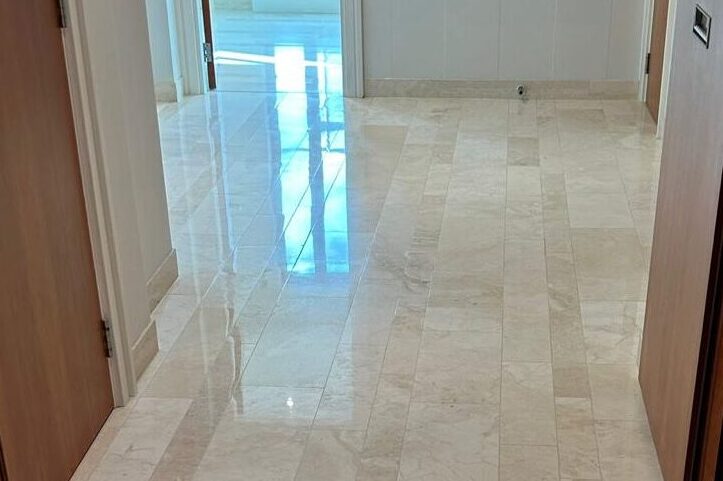
There are a few different reasons why stone is impregnated in this way rather than having a film applied to the surface. For smooth stone types and particularly polished marble, a surface sealant simply wouldn’t bond. In fact, the polishing process itself provides better protection. When you mechanically polish a stone surface, you create a tighter surface tension. This helps to reduce the ease with which liquids can penetrate.
It should be noted however, that a highly polished stone floor is more likely to become slippery. This is also another reason why surface sealants are not usually used for a stone floor. Creating a smooth film across the surface of the stone with a sacrificial layer will leave nowhere for moisture to be absorbed. A wet floor of any type is a slip hazard and so it is advisable not to artificially create this.
NB see this article details on when a surface wax is appropriate.
What about worktops?
You will be reassured to learn that the premise is the same for worktops. The most prevalent stone worktop is marble. Usually this will be finished in either a honed or a polished finish, both of which are smooth. When your worktop is installed, it will have an impregnator applied. Although your fabricator may use the term sealant, this is usually because it sounds a little more friendly. Just like when a floor is impregnated, this will leave the surface exposed.
Frequently we are called in to restore a marble worktop that has been damaged by lemon juice, vinegar or wine that has been spilled. This is a surface level mark and is referred to as etching. It occurs because marble is sensitive to acid. The damage is usually only on the very surface and is easily restored back to new by simply buffing the marble. Etch marks are perfectly normal and are not an indicator that the stone has not been sealed. In fact, you should thank the impregnator for doing its job and preventing permanent damage.
There are products available that can provide an extra layer of protection for marble worktops. Unlike floors, the slipperiness of a worktop is less of an issue. However, creating something that will bond to the stone that is seamless and doesn’t create a fake look is challenging. If you are seeking an etch-proof surface, we recommend a company called Storm Stone Care.
When will the sealant need to be topped up?
When it comes to the question of how often a to reseal a stone surface, this will depend on many factors. Most importantly, it is key to note that the impregnator itself does not degrade. On the contrary, when a wax or surface sealant is applied this will wear over time and need to be stripped and resealed regularly.
It is the impact of footfall and cleaning that will create the blueprint for how the stone wears. Stone will not degrade of itself. The longevity is dependent how you use it and look after it. The impregnator continues to do its job inside the tile. However, more pores within the stone will open over time. This is all due to the abrasion of foot traffic across the floor and the level of moisture that the stone is challenged to withstand. Our suggested cleaning regime below will help to slow this process.
Ultimately, you will know when your stone floor is ready to be resealed when it becomes harder to clean. This is an indicator that dirt is starting to penetrate. You might also notice that dropping even water onto the stone, sinks straight in rather than sitting on the surface and evaporating.
How do I look after my natural stone in the meantime?
For the most part, we are not called because a stone floor needs to be resealed. We are called in because the surface of the stone is dirty or stained. If you look after your limestone or marble floor using our cleaning guidance, then you might never need a professional to visit and reseal your stone.
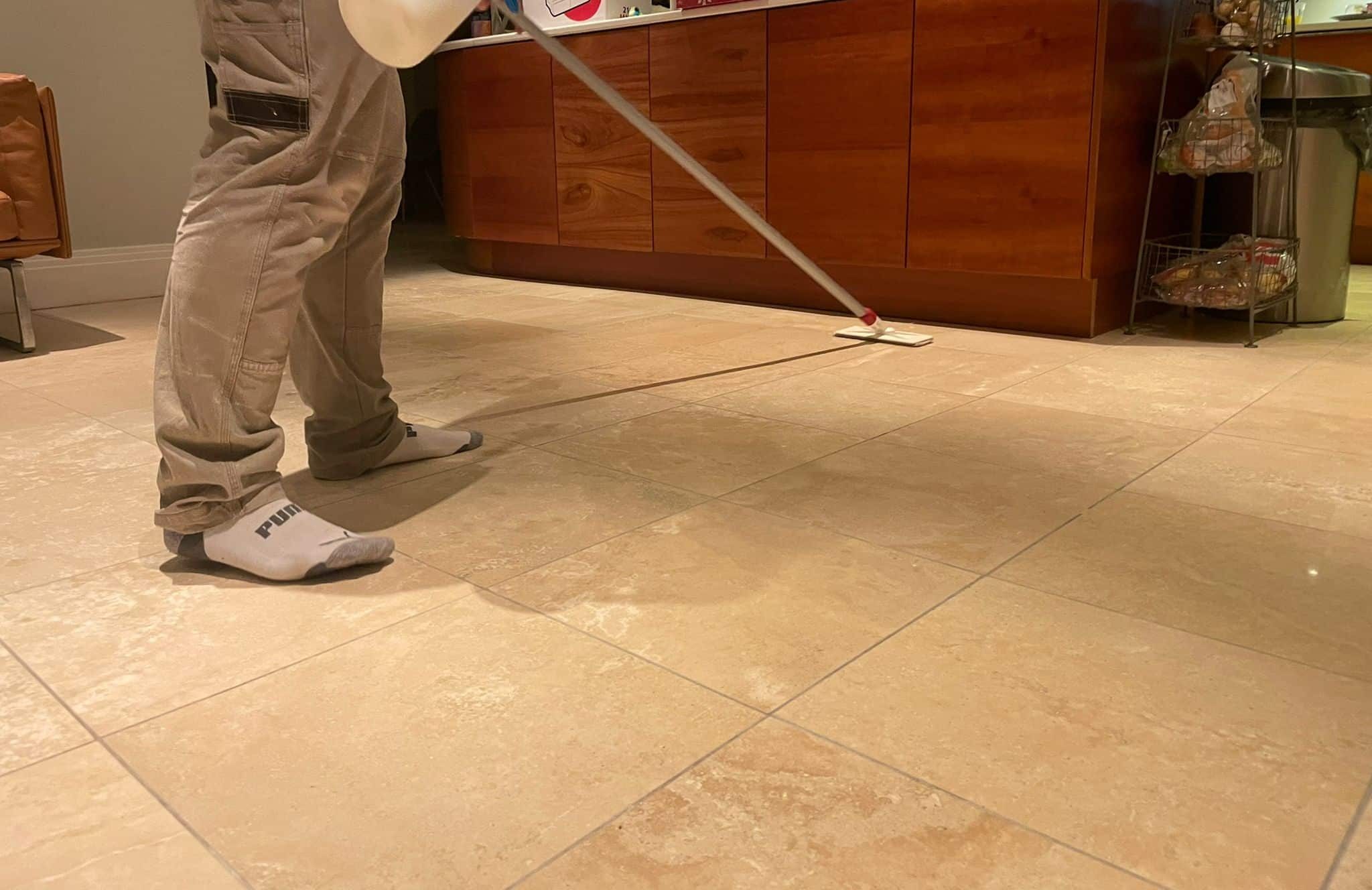
The best way to slow the need for resealing your stone is a simple yet effective maintenance checklist. If you want to keep the finish looking as good as the day it was installed, there are a few simple rules to follow. Keep shoes off inside the house. The less dirt that is walked into your home, the less that can find its way onto your stone. Regularly sweep the floor. It is quicker than vacuuming and kinder to your stone. These two simple actions have a dual impact. They work to keep the surface of the stone in good condition, and it also reduce the need for you to clean the floor. The less frequently that you can mop, the better for your stone.
When you do need to clean the floor it is essential to only use a pH neural cleaning product. When you do clean, only use a pH neutral cleaner. Watch out for supermarket detergents that are eco-friendly, this is not the same as being stone safe. Check the label or click here to see the products that we recommend.
Get in touch for advice on your stone
Stone is a sustainable, timeless choice for a home, but it does not look after itself. If you are ever unsure about the specific needs of your floor, it is always better to ask for tailored advice before reaching for the mop. You can contact us by emailing info@athenastonecare.co.uk