

Athena Stonecare
CARING FOR YOUR
NATURAL STONE
WORKTOPS, WALLS AND SINKS
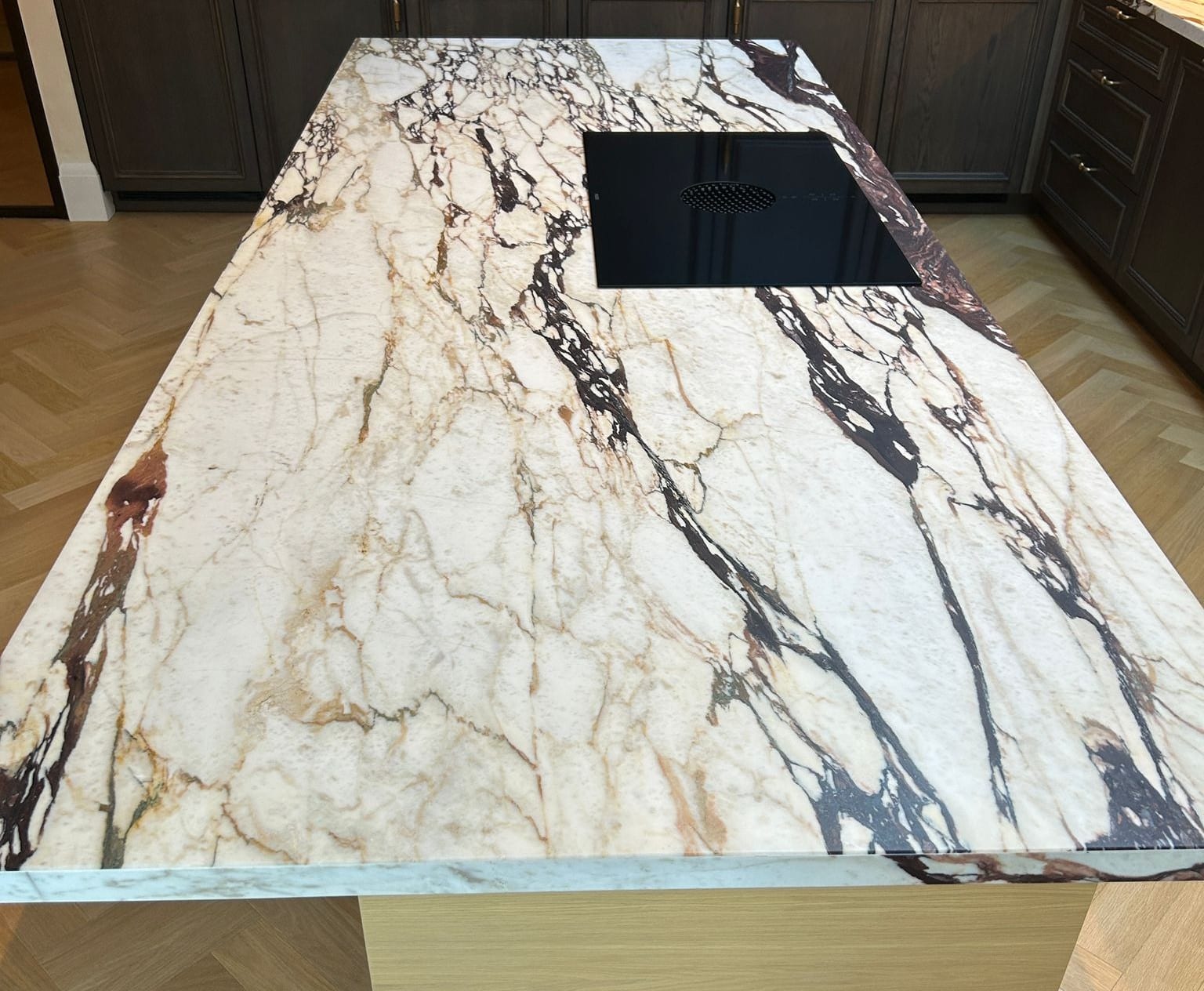
After completing a restoration, resurfacing or deep cleaning treatment your stone, it has been protected with an impregnator. This penetrates and binds to the stone capillaries of your stone to minimise absorption of water and oil-based liquids to help mitigate staining.
It is important to note that the stone surface remains exposed so acidic liquids can still cause damage.
to help you keep the surface of your stone in the best condition for as long as possible.
Use coasters to form a barrier between the stone surface and any potentially damaging liquids. Oils and vinegars in the kitchen and cosmetics in a bathroom have potential to stain or etch sensitive stone surfaces.
Blot up spills as soon as possible. Most spillages onto kitchen worktops and bathroom vanity tops are likely to damage a calcite-based stone (marble and limestone). Try not to wipe spills as this will spread the damage, but blot up with absorbent paper as soon as possible.
Hard-water can affect your stone, especially around taps and in shower areas. Installing a good quality water softening system will reduce limescale and mineral deposits occurring in these areas.
In bathrooms, it is essential to wipe up sitting water from all surfaces. This includes squeegeeing down the walls after everyone has taken a shower for the day. Take note of anywhere that water pools and try to keep on top of drying these areas.
Keeping your bathroom well ventilated will also help to keep surfaces dry.
Only use pH neutral cleaning detergent on and around your stone. Many household cleaners are acidic and will damage your marble, limestone, or travertine. A large number of glass cleaners also contain acid, so be careful when cleaning shower screens and mirrors close to your natural stone.
Faber360 is a fantastic ready-mixed pH neutral detergent spray that can be used for all surfaces in your kitchen and bathroom.
Faber Ciao Cal is a ready mixed pH neutral limescale remover. Ideal for cleaning taps and shower screens surrounding stone surfaces.
For dark-colored stone surfaces in particular, we recommend periodic reapplication of a colour-enhancing impregnator such as Faber P147+. This will maintain the level of protection from water and oil-based penetration but will also preserve the deep colour and aesthetics. Pour a small amount onto a microfiber cloth and apply to the stone surface in small circles until you have covered the whole area. Buff any residue with a fresh cloth and leave to dry naturally.
Acidic spills will still damage a stone that has been sealed, and color-enhancing sealant won’t reverse this damage; however, it will mask the aesthetic impact by reducing the color difference caused by the etch.
do we need our stone treating?
The frequency of professional maintenance visits will depend on the use of the room and how closely the maintenance advice has been followed. It will also depend on personal preference. Some clients are happy to allow their stone to develop a ‘patina’ over time with the odd scratch or etch adding character to the worktop, bathroom, or sink. For others who prefer a more polished look, regular professional maintenance is the only way to keep the stone in perfect condition.
We follow up with all of our clients around 1 year to 18 months after our initial visit, based on our professional opinion of when further work is likely to be necessary. We can also provide a price for maintenance immediately on request. However, we would still recommend re-visiting before commencing work to refamiliarise ourselves with your stone.
Please contact the team by calling 01494 438 294 or email info@athenastonecare.co.uk
For a full list of the recommended products visit www.athenastonecare.co.uk/maintenance